Mapping User Experiences to Glossary Shifts That Guide Payment Method Choices in Provider Mobile Apps Across Austria
Finley Weber · Oct 17, 2026
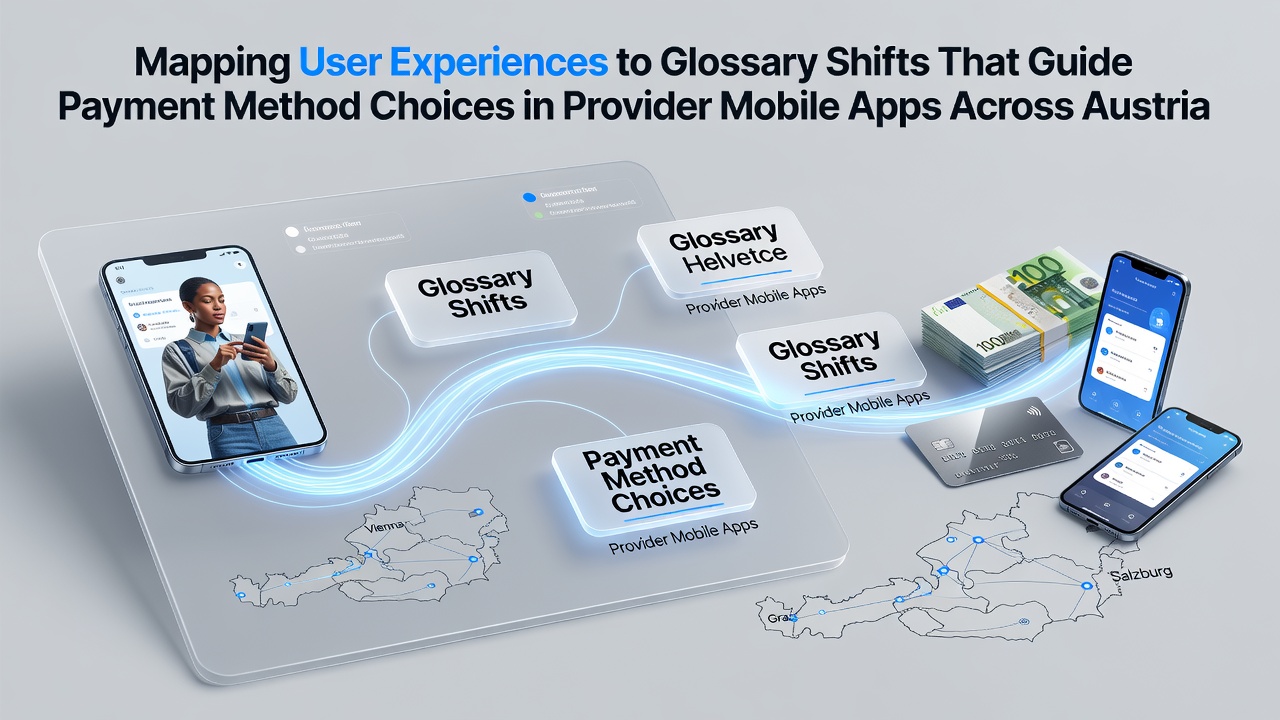
Mapping User Experiences to Glossary Shifts That Guide Payment Method Choices in Provider Mobile Apps Across Austria
Payment method selections in Austrian provider mobile apps depend on how users interpret evolving glossary terms that define transaction options, security features, and processing timelines, while researchers track these patterns through structured experience mapping across regions including Vienna, Salzburg, and Innsbruck. Data from the Austrian National Bank indicates that digital payment volumes grew steadily between 2022 and 2024, with mobile app interfaces playing a central role in directing users toward instant transfers, card-based options, or digital wallet integrations.
Glossary Evolution in Austrian Mobile Payment Interfaces
Terminology updates in provider apps reflect regulatory adjustments and technical improvements that alter how options appear to users, and these changes often occur alongside updates to Austria's payment services framework under EU directives. Observers note that terms such as "Sofortüberweisung" and "Echtzeit-Transaktion" have shifted in prominence within app glossaries, guiding selections toward methods that emphasize speed and confirmation visibility. Studies from the European Payments Council show that clearer definitions reduce selection errors by highlighting processing windows and fee structures directly in the interface flow.
User Experience Mapping Techniques
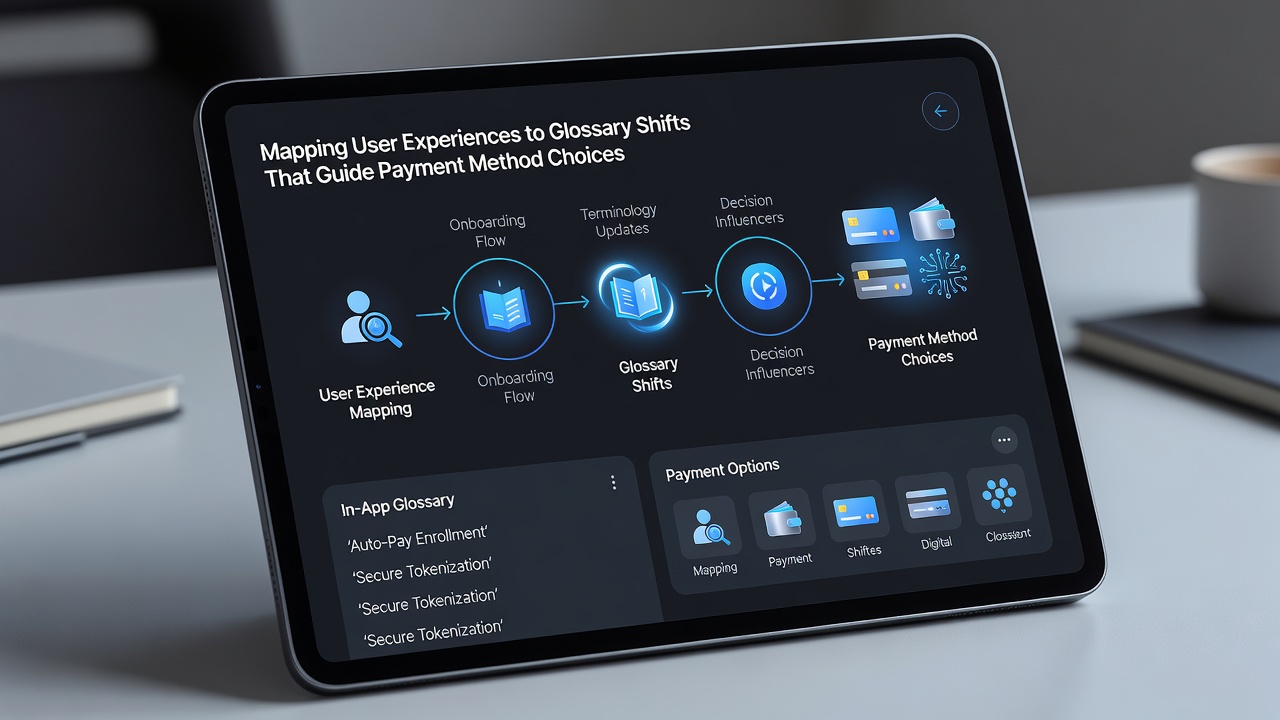
Experience mapping connects user navigation paths with specific glossary entries, revealing how label changes influence the sequence of taps and confirmations that lead to a completed transaction, whereas earlier static menus often presented fewer distinctions between bank transfers and instant options. One analysis conducted by a research team at the Vienna University of Economics and Business examined session data from multiple provider apps and found that users encountered fewer interruptions when glossary terms aligned with familiar banking language already used in national systems. Figures reveal that apps incorporating dynamic glossary tooltips recorded higher completion rates for cross-border payments compared with those using fixed terminology.
Patterns emerge when users encounter revised entries that explain surcharge calculations or settlement periods, and these adjustments frequently coincide with broader rollout of instant payment systems across the Eurozone. Researchers documented that individuals who consulted updated definitions selected SEPA Instant Credit Transfer more often than traditional batch methods, particularly in apps serving utility and subscription providers.
Regional Variations Across Austrian Provider Apps
Apps developed for providers operating in western Austria display glossary phrasing that differs slightly from those serving eastern regions, reflecting local preferences for certain card networks and e-wallet partners, while central data repositories maintained by industry associations track these divergences. Information published by the Austrian Federal Economic Chamber indicates that mobile payment adoption rates vary by province, with higher uptake of contactless options in urban centers. Those who studied app analytics across multiple providers observed that glossary updates introduced in late 2024 prompted measurable shifts toward methods supporting real-time balance checks.
Integration of new terms describing authentication layers, such as biometric verification steps, has guided users away from older SMS-based confirmations in several major provider platforms. Evidence from cross-provider comparisons shows that consistent placement of these definitions within the payment funnel correlates with reduced abandonment rates during checkout sequences.
Connections Between Glossary Updates and Method Selection Data
Selection statistics compiled by payment processors operating in Austria demonstrate that revisions to glossary entries describing fee transparency produce immediate changes in user behavior, and these records cover transactions processed through both domestic banks and international card schemes. Academic papers examining digital finance adoption note that users respond to explicit explanations of currency conversion impacts when apps serve cross-border scenarios. Providers that synchronized glossary language with updates from the European Central Bank observed steadier uptake of preferred methods over several quarters.
Additional mapping exercises highlight how seasonal campaigns coincide with temporary glossary expansions that introduce limited-time options, such as deferred payment plans for specific services. Data collected through 2025 shows sustained preference for methods whose descriptions emphasize fraud protection features, and these preferences hold across age groups when definitions remain accessible at the point of choice.
Conclusion
Mapping exercises continue to link glossary modifications directly to payment method outcomes in Austrian provider mobile apps, with ongoing data collection supporting refinements that align terminology with user navigation habits. Regulatory timelines and technical standards shape these adjustments, while regional providers maintain records that feed into national and EU-level reporting structures. Continued observation of these interactions provides the basis for further interface adjustments scheduled through subsequent years.